"Mystery creates wonder and wonder is the basis of man's desire to understand"
- Neil Armstrong
We have been working on a space inquiry for weeks now. Our learners (and us!) are so engaged and learning a lot about our solar system. Here is a small snippet into what we have been learning about and the activities we have engaged in.
We spent time gathering wonders and ideas about space which dictated the direction of our learning. There were many wonders about planets, so we started there. We spent a day learning about each planet and added the planet to our classroom representation of the solar system.


Here are some of the videos we watched:
Our scientists asked many questions about the planets, stars and whole solar system. Here is a small snippet of their wonders:
C.M- I wonder why that sun is red instead of the yellow sun that has little points on it?
I.O- Is Mercury a rock?
N.B- I wonder if Venus is hotter than the sun?
E.Bu- I wonder what it looks like inside Venus?
L.R- I wonder how the planets get their colour?
M.S- I wonder if the orange (on Mars) is the lava?
L.G- I wonder why Jupiter has 62 moons?
A.S- I wonder why there are dots on Jupiter?
J.B- I wonder if the big black red circle (on Jupiter) is a volcano?
M.R- I wonder why Saturn is a sphere?
T.P- I wonder why Saturn has those rings?
A.B- I wonder why it’s (Saturn) a gas giant?
S.A- I wonder Pluto is not the same to these planets (dwarf planets)?
E.B- I wonder why the moon shines on the people when they sleep at night?
E.S- I wonder the asteroid bumps to the moon?
B.M- I wonder why the moon is a rock?
E.W- I wonder why the meteorite has a little bit of wrinkles on the top?


We had a couple provocations out to encourage their creativity.


Our learners integrated their new learning about space into many different areas of the classroom. They built spaceships, satellites and planets out of Lego, they painted and wrote about planets, they wrote about the solar system on the computer and used loose parts to create planets.

 |
| After watched videos sent back from the satellite Cassini (click here for more info from NASA), J.T. built his own satellite to take photos of Earth. |


 |
| Our theatre drama centre has turned into an area our learners act our orbiting and rotating of the planets |


We read a book called 'Postcards from the Planets'. This book inspired our writers to write their own postcard from a planet. It was a great way for them to share their learning!

We still have so much information to explore and so many more questions! There have been many wonders about astronauts and satellites, so we will be learning about those next! Stay tuned!
*Updated*
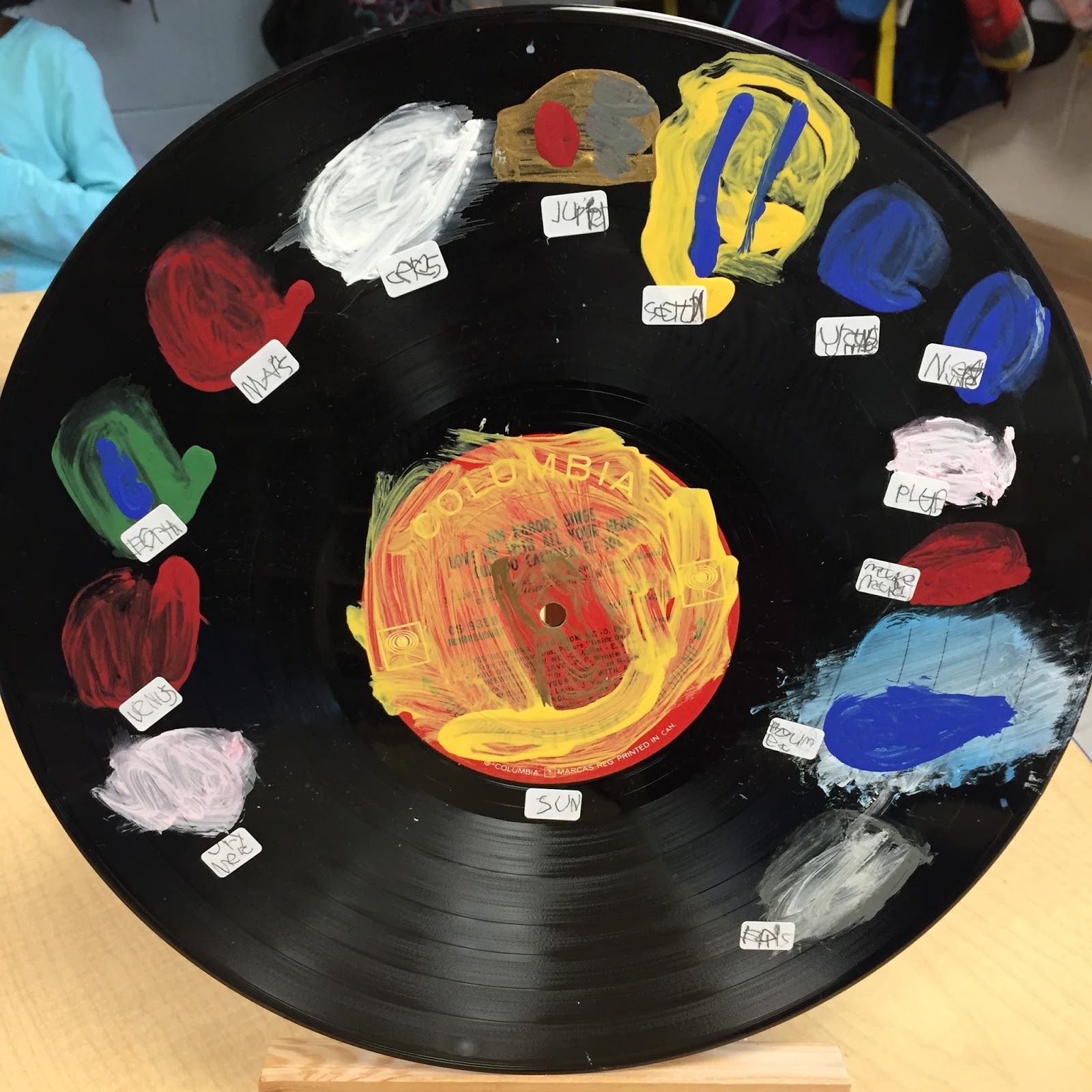
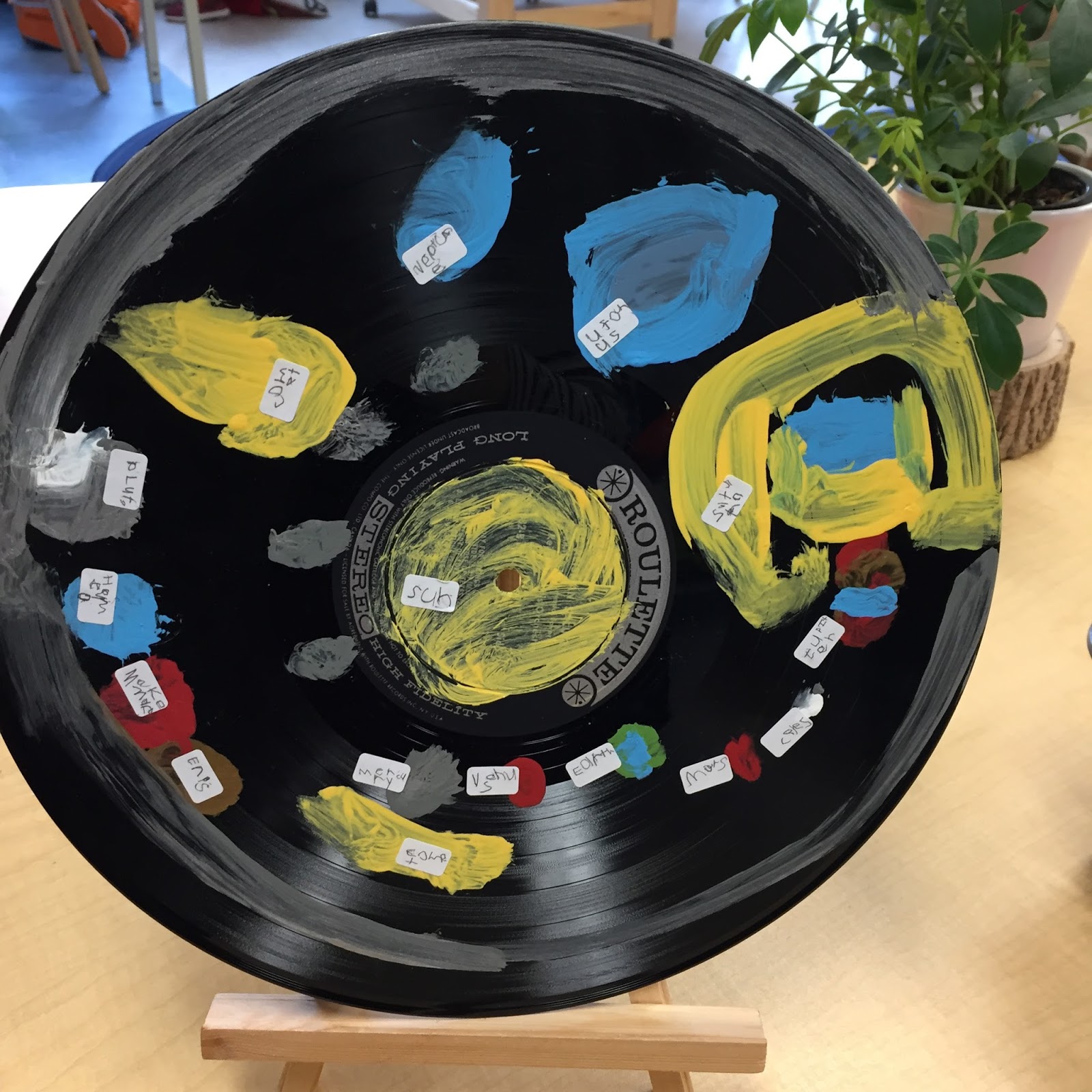
We did a final art project to share our learning about the solar system. Using old records each scientist/artist was able to create their own!